
Web Positioning: What It Is and How It Works
The success of any digital project depends largely on its visibility in search engines. In this article you will discover everything you need to improve your online presence with effective, up-to-date strategies.
We recommend our specialized SEO service
What is web positioning?
Web positioning is the process of improving a site's visibility in search results, or SERPs (Search Engine Result Pages). Its main goal is to appear in the top positions when users search for products, services or information related to your business.
Although many people use the terms interchangeably, there is a subtle difference: SEO (Search Engine Optimization) is the set of techniques applied, while positioning is the result obtained. Think of SEO as the actions and of positioning as the achievement reached: they are closely related but, to be precise, they are not the same thing.
In 2026 this discipline has become more sophisticated. Search engines prioritize user experience, content quality and real authority over technical tricks. For companies, this means working on organic visibility is not optional: it is essential to compete.
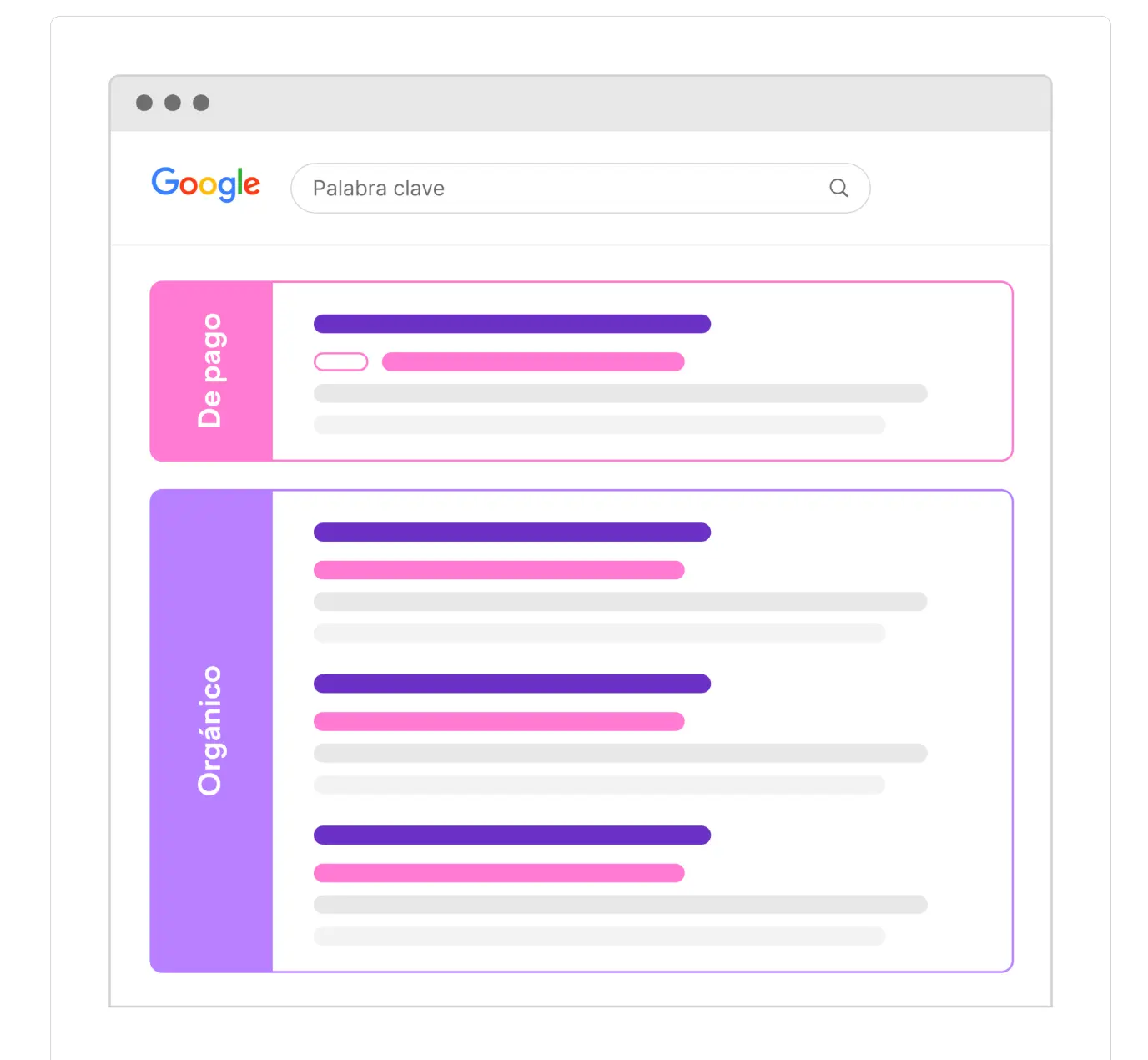
A good strategy directly impacts three critical areas: it increases qualified traffic to your site, builds trust in your brand and, finally, increases form conversions, which translates into higher sales for your business. Users tend to trust organic results more than paid ads.
How does web positioning work?
How search engines work
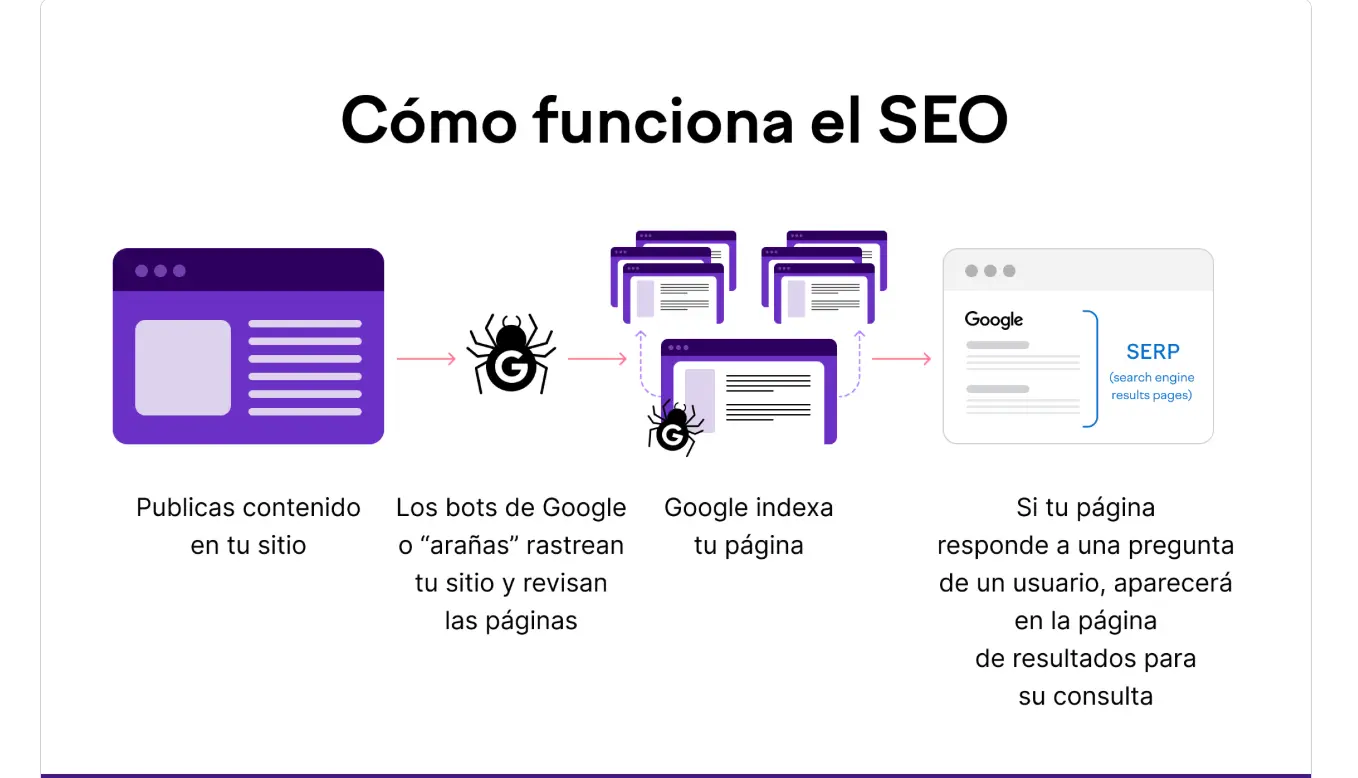
To understand how to improve your visibility, you must first understand how platforms and search engines like Google work. The process happens in three fundamental phases.
1. crawling is the first step. Robots (called crawlers or spiders) constantly go through the web following links between pages. When they discover new or updated content, they analyze it to understand what it is about.
2. Then comes indexing, where the search engine stores and organizes the information collected. Not every crawled page ends up indexed; they must meet certain quality and relevance standards.
3. Finally, the ranking algorithms determine the order in which results appear when someone performs a search. These systems consider hundreds of factors to decide which pages deserve the top positions.
The main factors that influence ranking include the relevance of the content to the query, the domain's authority, loading speed, mobile experience and user behavior signals, meaning how people interact with your web page.
Main signals that determine positioning
Relevance
The relevance measures how well your content answers the search intent. It is not just about including keywords, but about offering useful, complete information that satisfies what the user really needs.
Authority
The authority is built through quality links from other websites, brand mentions and signals of reliability or social proof. A site with a good reputation is more likely to rank better.
User experience – UX/UI
The user experience covers technical and design aspects: loading speed, intuitive navigation, responsive design (adapting to mobile devices) and how easy it is to find information. Visitors must be able to interact comfortably with your site without friction: tiny buttons that cannot be clicked, pop-ups, bars that get in the way of navigation, chats that appear, ads, etc.
E-E-A-T
The concept of E-E-A-T (Experience, Expertise, Authoritativeness, Trustworthiness) has become fundamental. Google especially values content that comes from sources with demonstrable experience, specialized knowledge, recognized authority and that builds trust.
Types of web positioning
Organic web positioning (SEO)
This approach focuses on gaining visibility naturally, without directly paying to appear in results. It is a long-term strategy that requires patience, but it produces sustainable, incremental results.
Constant work on quality content, technical improvements and authority building eventually puts your site in the top positions. The benefits last over time even if you temporarily reduce your efforts.
Paid web positioning (SEM)
SEM (Search Engine Marketing) uses pay-per-click advertising to appear in the first places. Platforms like Google Ads let you show ads to specific audiences based on keywords, using an auction and relevance system to display the results.
Results are immediate: you can generate traffic from day one. It is ideal as a complement to SEO, especially for product launches, seasonal campaigns or while your organic strategy matures.
SEO or Google Ads? The most profitable strategy is usually to combine them
SEO builds organic visibility and authority in the medium term, while Google Ads speeds up results and generates leads from day one. If you want to grow without depending on a single channel, the best route is usually a hybrid strategy: SEO to sustain growth and professional Google Ads management to scale conversions with budget control and clear measurement.
Local positioning
This specialization aims to win customers in specific geographic locations. It is crucial for physical businesses or those offering services in certain areas.
Optimizing your Google Business profile, getting positive reviews and using geo-located keywords helps you appear in searches like “restaurant near me” or “dentist in [city][borough][neighborhood]”.
SEO content positioning
Beyond technical optimization, creating valuable material that answers specific questions is a powerful strategy. This includes blog articles, guides, tutorials and educational resources.
The key is to understand the intent behind each search and create content that satisfies that need completely. Semantic relevance and context carry more weight than ever.
Benefits of web positioning for businesses
Implementing a solid strategy creates significant competitive advantages. The first benefit is high-intent organic traffic: people who find your site through searches are usually more interested in your products or services.
The credibility and trust increase naturally. Users perceive organic results as more reliable than ads, which improves your brand's reputation.
In economic terms, it represents a reduction in acquisition costs. While advertising requires continuous investment, organic traffic keeps arriving with no direct cost per click.
You build a sustainable competitive advantage that is hard to replicate quickly. If your competition does not invest in this area, you will take the space they leave empty.
Conversion rates tend to be higher because you attract users at the exact moment they are looking for solutions. This translates into greater long-term profitability, turning your site into an asset that generates constant value.
How to do web positioning step by step
1. Research and initial analysis
Before implementing any tactic, you need to understand the current state of your site. Run a technical SEO audit to identify errors that may be affecting your visibility: broken links, indexing problems, duplicate content or excessive slowness.
The competitor analysis shows you what other competitors in your industry are doing well. Identify which keywords they use, what kind of content they publish and how they structure their sites.
The keyword research is fundamental. Do not just identify terms with high search volume; also consider how hard it is to compete for them and, above all, the intent behind each query.
A proven technique to start with is researching long-tail keywords that let you initially rank for specific keywords with low volume, but as you progress you will be able to go after more competitive keywords.
The intent study lets you classify searches into categories: informational (they want to learn), navigational (they look for a specific site), commercial (they compare options) or transactional (ready to buy).
2. Technical SEO
The site architecture must be logical and intuitive. Organize content so that both users and robots can navigate easily. A clear hierarchical structure makes crawling easier and improves the experience.
The loading speed directly impacts ranking. Optimize images, minimize code, use caching and consider quality hosting with a CDN or Content Delivery Network. Core Web Vitals are official Google metrics you should monitor.
The mobile-first design is non-negotiable. Most searches happen from mobile devices, and Google mainly uses the mobile version to index sites.
Ensure correct indexing by verifying that important pages are accessible. Use tools like Google Search Console, formerly Google Webmaster Tools, to identify blocked pages or pages with errors.
The sitemap.xml helps search engines discover your content, while the robots.txt file tells them which areas they can or cannot crawl. Configure them correctly to make the crawlers' work easier.
The security is mandatory. Implement SSL certificates (HTTPS) to protect users' information and gain trust points with both them and search engines.
3. On-Page SEO
Each page must have unique, attractive titles and meta descriptions . The title should include the main keyword and not exceed 60 characters. The meta description should not exceed 156 characters; although it does not directly affect ranking, it influences the click-through rate.
The friendly URLs should be short, descriptive and contain relevant words. Avoid numbers or strange characters that add no meaning.
The headings (H1, H2, H3) structure the content and help both users and search engines understand the hierarchy of the information. Use them logically and naturally; tell a story with your headings that can be scanned.
The semantic optimization goes beyond repeating keywords. Include related terms, synonyms and context that show a deep understanding of the topic. Google understands concepts, not just isolated words.
The internal links connect related content within your site, distributing authority and making navigation easier. They help users discover more relevant information.
All images and media must be optimized: reduced file size (under 100 KB), a suitable format such as WebP, descriptive alt text and, when possible, meaningful file names.
4. Off-Page SEO
The strategic link building consists of getting links from other relevant, quality sites. It is not about quantity but about the relevance and authority of the sources that link to you.
The brand mentions even without a direct link also count. When other sites talk about your company or content, Google interprets it as a relevance signal.
The social signals, although not a direct ranking factor, amplify the reach of your content and can generate links and indirect traffic.
The authority building is a gradual process. Take part in your industry, create content worth referencing, collaborate with other experts and establish your brand as a trusted source.
5. High-performing content
Create useful, in-depth and up-to-date content that truly adds value. Answer complete questions, offer unique perspectives and keep the information current.
Adapt the format to the type of search: informational (educational articles), commercial (comparisons, reviews) or transactional (product pages with clear information to buy).
Optimize for featured snippets (Featured Snippets) by structuring concise answers, using lists, tables or clear definitions that Google can easily extract.
The E-E-A-T content shows that the writer has real experience, specialized knowledge, recognized authority and builds trust. Include author bios, references, verifiable data and transparency.
6. Measurement and continuous improvement
Define key metrics to assess your progress: CTR (click-through rate), impressions, organic traffic, average positions, conversions and return on investment.
Use recommended tools such as Google Search Console, Google Analytics (GA4), keyword analysis platforms and technical audit tools.
Set up a monthly iteration where you analyze results, identify opportunities and adjust your strategy. Successful positioning requires constant adaptation to algorithm changes and user behavior.
Common web positioning mistakes and how to avoid them
One of the most frequent failures is ignoring search intent. Creating content without understanding what the user is really looking for results in low conversions, little engagement and a high bounce rate even if you get traffic.
Overloading with keywords (keyword stuffing) does more harm than good. Modern algorithms detect this practice and penalize it. Write naturally for humans, not for robots.
Not updating content is wasting opportunities. Outdated information loses relevance and rankings. Review your material periodically and update it with fresh data.
Not optimizing for mobile means losing most of your potential audience and receiving penalties from Google, which prioritizes the mobile experience.
Building toxic links from spam sites or buying links in bulk can result in severe penalties. Focus on quality over quantity.
The lack of a content strategy leads to erratic publishing without coherence or planning, wasting resources, crawl budget and opportunities.
Optimization for artificial intelligence and new search experiences
The search landscape is undergoing a radical transformation. Beyond traditional SEO, you need to prepare your content for new ways users find information.
SGE (Search Generative Experience): generative AI search
Google has built AI-generated answers directly into its results. When someone performs a search, they may receive an automatically generated summary before seeing the traditional links.
To optimize your content for SGE, structure information clearly with direct answers to specific questions. Use a question-and-answer format, tables and numbered lists, include verifiable data with clear sources, and organize the content into well-defined sections that AI can easily cite.
The key is to create content that can be referenced: when AI generates an answer, it prefers to cite sources with structured, up-to-date and authoritative information. Sites that show real experience (E-E-A-T) are more likely to be cited.
AIO (AI Optimization): direct optimization for AI
This emerging discipline focuses on making your content easily understandable and usable by language models. Unlike traditional SEO, focused on ranking algorithms, AIO aims for AI to understand and recommend your content.
Implement schema markup to help machines understand the context. Use JSON-LD to mark up products, articles, events, frequently asked questions and other types of structured content.
Write clearly and without ambiguity. AI processes direct content better than text with double meanings or implicit references. Include clear definitions, explain acronyms and provide complete context.
Create conversational content that answers how users ask real questions. Think about voice searches and natural queries: “what is the best way to…” instead of “best way + keyword”.
AEO (Answer Engine Optimization): optimization for answer engines
Answer engines like ChatGPT, Perplexity, Claude and others are changing how people search for information. Instead of getting a list of links, they get direct conversational answers.
To position yourself in these systems, focus on deep topical authority. Build complete libraries of content about your niche that cover topics from multiple angles.
Structure your content with a clear semantic hierarchy. AI models scan relationships between concepts, not just keywords. Connect related ideas through internal links and cross-references.
Include original data, case studies and unique perspectives. AI tends to cite sources with information that cannot easily be found elsewhere, especially if they add differentiated value.
Update content regularly with fresh information. AI systems prioritize recent sources when answering questions about current or fast-evolving topics.
GEO (Generative Engine Optimization): optimization for generative engines
Generative engines create complete answers by combining information from multiple sources. Your goal is to become one of those preferred sources.
Implement citations and references within your content. When you mention statistics, studies or specific data, include the source. This increases your credibility for both human readers and AI.
Use diverse formats: text, lists, tables, comparisons. Generative engines extract information from different formats depending on the user's question. The more versatile your presentation, the more chances of being cited.
Optimize for snippets and extractable fragments. Create concise paragraphs of 40-60 words that answer specific questions completely but briefly. These are ideal for AI to quote directly.
Build consistent authority in your niche. Generative systems learn which sources are reliable for specific topics. If you constantly produce quality content on a topic, you become an authoritative reference.
Traditional SEO + AI optimization: an integrated strategy
Do not abandon conventional SEO; integrate it with these new disciplines. Traditional search engines will remain important, but now you must think about multiple discovery channels.
Create content that satisfies both algorithms and AI. This means: impeccable technical structure, deep and valuable content, direct answers to questions, verifiable data and clear presentation.
Monitor mentions of your brand in AI answers. Emerging tools let you track when ChatGPT, Perplexity or other systems cite your content. This gives you insights into what works.
Experiment with different formats and measure results. Try long articles versus concise answers, technical versus accessible content, different heading structures. Observe what generates the most visibility in both traditional search engines and AI systems.
Unified best practices for omnichannel visibility
Regardless of the channel, certain principles stay constant. Genuine quality beats technical tricks. Create content that truly helps people, answers their questions completely and adds unique value.
A clear structure benefits all systems. Use descriptive headings, well-organized paragraphs, lists where appropriate and logical transitions between ideas; complement with graphics, infographics and videos if possible.
Constant updating keeps you relevant. Both traditional algorithms and AI prioritize recent information. Set up a calendar to review and update existing content.
Transparency about authorship and experience builds trust in every format. Include author bios, mention relevant experience and be transparent about the limits of your knowledge.
Finally, measure and adapt. The search ecosystem is constantly evolving. What works today may change tomorrow. Keep strategic flexibility and a willingness to experiment with new formats and platforms.
How long does web positioning take to show results?
The standard answer is between 3 and 6 months to see significant improvements, although this varies by multiple factors. New sites take longer than established sites with a positive history.
The factors that speed up results include: a domain with prior authority, a low-competition industry, correct technical implementation from the start and constant creation of quality content.
On the other hand, factors that delay results are: previous penalties, very high competition, unresolved technical problems, unfavorable algorithm updates or lack of consistency in the strategy.
It is crucial to understand that SEO is continuous evolution, not quick tactics. Shortcuts usually result in penalties. Consistent, patient investment produces sustainable results that grow over time.
Conclusion: web positioning as a strategic investment
Improving your visibility in search engines is not an expense, it is an investment with proven return. The real impact is measured in sales, qualified leads and sustainable business growth.
For digital businesses, especially in competitive markets, not working on your organic presence means giving ground to competitors who do. Every day that passes without a strategy is a missed opportunity.
The final recommendation to get started is simple: begin with an honest audit of your current situation, define clear, measurable goals and develop a realistic action plan. You do not need to implement everything at once; moving step by step with consistency produces better results than trying to do everything at the same time.
Web Positioning FAQ
What is web positioning and what is it for?
It is the process of improving a site's visibility in search results. It is used to attract qualified traffic, increase brand authority and generate more conversions without depending only on paid advertising.
How much does it cost to rank a web page?
The cost varies depending on scope and competition. You can start with free tools and your own work, hire consultants from $500–$2000 USD per month or specialized agencies from $3000+ USD. What matters is to see it as a strategic investment.
What is the difference between SEO and SEM?
SEO works on organic visibility through technical optimization and content, with medium to long-term results. SEM uses paid advertising to generate immediate visibility. They complement each other: SEO builds assets, SEM speeds up results.
How long does web positioning take?
Generally between 3 and 6 months to see significant improvements. New sites or sites with a negative history may need more time. The niche's competition and the quality of execution have a direct influence.
What are the best positioning techniques in 2026?
The most effective include technical optimization focused on Core Web Vitals, content based on search intent and E-E-A-T, quality links, an impeccable mobile experience and continuous data analysis to iterate and improve.
How does AIO (AI Overviews) affect web positioning?
AIO changes how Google shows quick answers using AI. To appear there, your content must be clear, structured, accurate and data-based. Pages that answer questions directly and completely are more likely to be used by AI.
What is GEO (Generative Engine Optimization) and how do you apply it?
GEO is the evolution of SEO for AI-powered search engines. It involves creating semantic content, covering the full context of the topic, using reliable sources, correct markup and offering a clear experience for both users and language models.
What is SGE (Search Generative Experience) and how do you prepare?
SGE generates automatic answers by combining several sources. To compete you need deep, up-to-date and very useful content. Google prioritizes credibility, topical authority, signals of real experience and an outstanding user experience on your site.